
Self-Driving Cars: Who Is Sanctioned for Traffic Violations?
Key Takeaways
Road traffic law has historically been structured around a natural person: the driver. But who can be ticketed when a vehicle is operating in autonomous mode, without a human driver, or when the automated driving system itself controls the vehicle? The key issue is determining to whom the violation should be legally attributed when AI is behind the wheel.
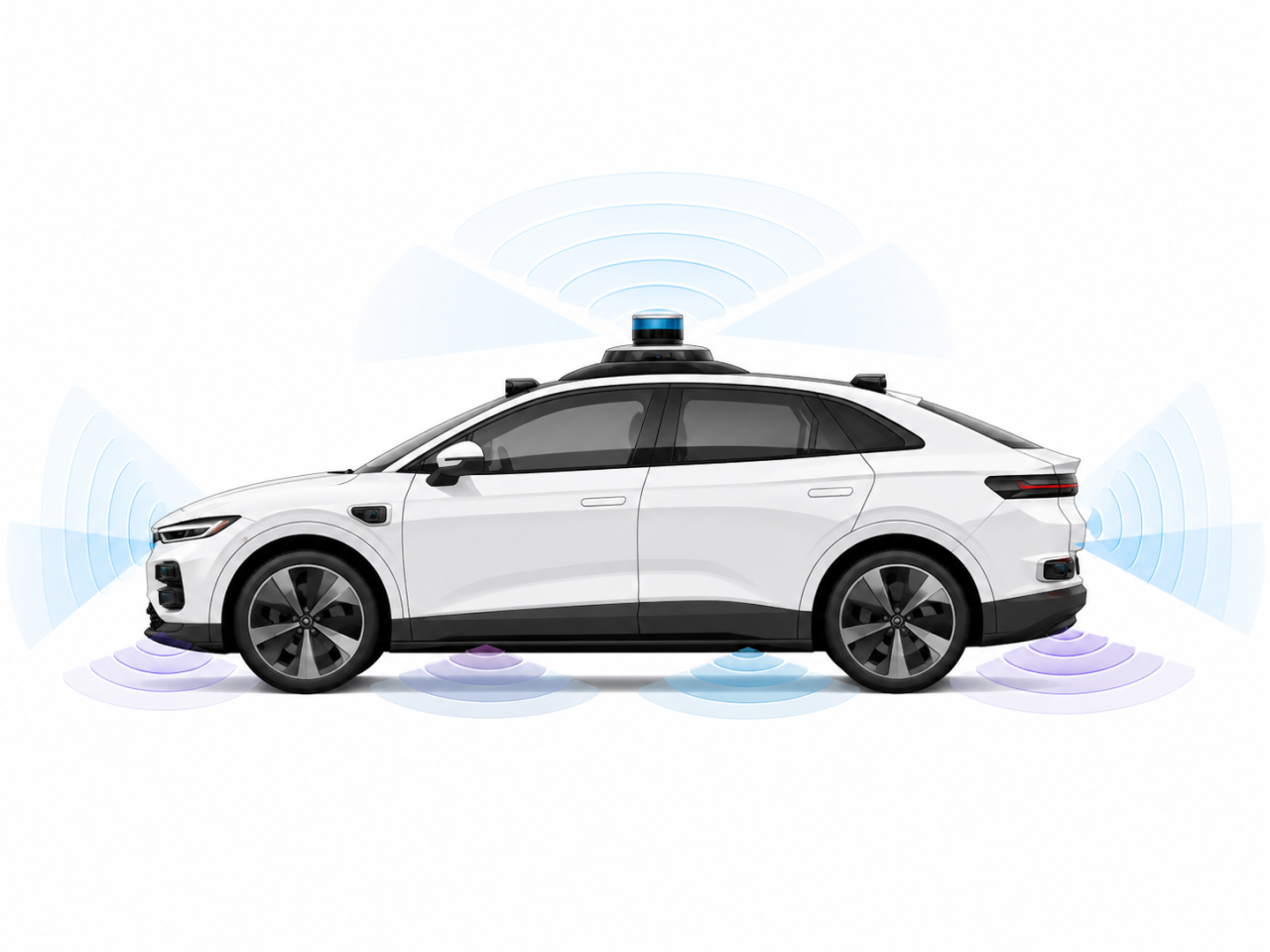
Autonomous vehicles are already operating on our roads. In the United States and China, robotaxis are circulating in several cities. This will soon also be the case in Europe. Although autonomous vehicles are generally regarded as highly safe, they do not always comply with traffic rules: failure to obey traffic signals, speeding, failure to yield, and other violations.
Road traffic law has historically been structured around a natural person: the driver. In a conventional vehicle, when a traffic rule is violated, the driver is ticketed.
But who can be ticketed when the vehicle is operating in autonomous mode, without a human driver, or when the automated driving system itself controls the vehicle? The key issue is determining to whom the violation should be legally attributed when AI is behind the wheel.
French law has introduced the concept of a “vehicle with delegated driving” into the French Highway Code. In the United States, California has recently amended its Vehicle Code to address this issue.
This article supplements our previous article, “Self-Driving Cars: Who Is Liable in the Event of an Accident?”
1. The Principle: The Driver Is Sanctioned for Their Driving
Article L.121-1 of the French Highway Code (Code de la route) provides that “the driver of a vehicle is criminally liable for offenses committed by them while driving that vehicle.”
This model works for conventional vehicles. It rests on three elements: a human driver controls the vehicle; that driver makes the driving decisions; and the violation can be attributed to that driver’s conduct.
This principle, which appears straightforward at first glance, becomes more complex when the vehicle is equipped with an automated driving system capable of exercising all or part of the vehicle’s dynamic control. (1)
The French Highway Code also provides for situations in which the financial penalty may be borne by a person other than the vehicle’s driver. Article L.121-3 of the French Highway Code provides that, by way of derogation from Article L.121-1, the holder of the registration certificate, namely the vehicle owner, is financially liable for the fine for certain violations specified by decree, unless they establish that the vehicle was stolen, that a force majeure event occurred, or that they provide evidence showing that they did not commit the violation. (2)
This distinction is important for autonomous vehicles: the French Highway Code already distinguishes between the driver’s criminal liability and the financial allocation of the fine. This logic is being transposed and adapted to autonomous vehicles, or “vehicles with delegated driving.”
2. The Evolution of the Principle: The Vehicle Manufacturer May Be Financially Liable for the Fine
In France, only Level 2 and Level 3 autonomous vehicles are currently authorized (see note 1 below).
The French Highway Code includes specific provisions on vehicles with delegated driving. (3)
2.1 When the Vehicle Is in Automated Mode, the Driver Is Not Necessarily Liable
Article L.123-1 of the French Highway Code provides that the principle of criminal liability of the driver set out in Article L.121-1 does “not apply to the driver, for offenses resulting from a maneuver of a vehicle whose driving functions are delegated to an automated driving system, where that system exercises (...) dynamic control of the vehicle.”
Accordingly, when the automated system is effectively driving the vehicle in accordance with its conditions of use, the driver cannot be treated as if they had personally carried out the maneuver.
However, under the current regulatory framework, the driver must remain able and ready to respond to a takeover request when required by the system. This means that there must still be a person seated behind the wheel.
2.2 In the Event of a Violation in Automated Mode, the Manufacturer Will Be Ticketed
Article L.123-2 par. 2 of the French Highway Code provides that, where a vehicle in autonomous mode violates a traffic rule punishable by a fine, the vehicle manufacturer or its authorized representative is financially liable for the fine incurred.
For example, a vehicle with delegated driving is operating in automated mode, within its conditions of use, and commits a traffic violation as a result of a maneuver decided by the system. In that situation, the fine will be imposed on the vehicle manufacturer or its authorized representative, and not automatically on the person present in the vehicle.
This rule calls for three observations:
i. Article L.123-2 designates the vehicle manufacturer or its authorized representative. It does not directly refer to the AI system provider or the software provider;
ii. To account for the absence of a human driver responsible for the violation, the provision refers to the concept of “financial liability for the fine.” This does not necessarily mean treating the manufacturer as a human driver who personally committed the violation;
iii. Finally, this rule assumes that the system exercises dynamic control of the vehicle in accordance with its conditions of use. If the automated driving system is used outside its intended operating domain, particularly where a takeover was required or where the driver failed to comply with certain obligations, the driver will be financially liable for the fine.
Accordingly, a fine, as the sanction for a traffic violation, is no longer limited to penalizing the driver’s conduct. Compliance with traffic rules becomes part of the autonomous vehicle’s conformity and operation, in order to ensure the safety of passengers and other road users.
3. In the United States: the Example of California
In the United States, there is no comprehensive federal regime identifying the person to be sanctioned when an autonomous vehicle commits a traffic violation. This issue is primarily governed by state law.
California has recently adapted its traffic regulations to address violations of the Vehicle Code when no human driver is seated behind the wheel. (4)
Until now, even where law enforcement officers could observe that a robotaxi or autonomous vehicle had committed a violation, such as failing to obey traffic signals or performing a dangerous maneuver, ticketing was hindered by the absence of a human driver. In particular, the media reported on the case of a Waymo vehicle that was pulled over by the police in San Bruno, California, after making an illegal U-turn while no human driver was present in the vehicle. (5)
As of July 1, 2026, when a law enforcement officer observes a violation of the California Vehicle Code or a local traffic rule committed by an autonomous vehicle while autonomous technology is engaged, the officer may issue a “notice of autonomous vehicle noncompliance”.
This notice, which must identify the alleged violation, the date, time, and location of the violation, and the vehicle’s license plate number, will be sent to the autonomous vehicle manufacturer. The manufacturer must then transmit it to the Department of Motor Vehicles (DMV) within 72 hours.
The text also specifies that the issuance of a notice of autonomous vehicle noncompliance does not, by itself, create a presumption that the autonomous vehicle is unsafe. In addition, the manufacturer may challenge the nature or existence of the alleged violation.
This procedure should therefore be understood as an administrative traceability and vehicle compliance monitoring tool. The manufacturer is the DMV’s point of contact, and the violations observed may be used by the administrative authority to monitor the behavior of autonomous vehicles and, where necessary, take measures concerning operating authorizations.
This provision does not create a new traffic ticket issued to the robot. It establishes a specific mechanism for tracing violations in order to identify potential noncompliance issues involving automated driving systems.
Ticketing autonomous vehicles requires the law to rethink a fundamental concept of traffic law, i.e. the driver. French traffic law provides a clear response for Level 2 and Level 3 vehicles with delegated driving: when the automated system exercises dynamic control of the vehicle in accordance with its conditions of use, and a maneuver by the system is punishable by a fine, the vehicle manufacturer or its authorized representative is financially liable for that fine. However, French regulations will need to be adapted once driverless vehicles, corresponding to Level 4 autonomy, are authorized to operate on French roads.
(1) SAE International has definied six levels of autonomy. Level 0 (no automation) is limited to warning systems, such as lane departure warnings or emergency braking. At Level 1 (driver assistance), the system includes adaptive cruise control and lane keeping assistance. At Level 2 (partial automation), the system controls steering and speed under driver supervision, with immediate takeover required. At Level 3 (conditional automation), the system takes control of driving under certain conditions, and the driver must retake control when requested by the system. Level 4 (high automation) corresponds to autonomous driving within a defined geographic area, or geofenced zone, such as robotaxis. Level 5 (full automation) corresponds to complete autonomous driving without geographic or environmental restrictions and is not yet commercially available. This article focuses on Levels 3 and 4, namely conditional and high driving automation. (SAE J3016 Standard)
(2) The list of violations appears in Article R.121-6 of the French Highway Code. It includes, in particular, violations relating to seat belt use, use of a handheld phone, use of reserved lanes, and certain traffic rules.
(3) Ordinance No. 2021-443 of April 14, 2021 on the criminal liability regime applicable in the event of the operation of a vehicle with delegated driving and its conditions of use, codified in Articles L.123-1 et seq. of the French Highway Code.
(4) AB 1777 amending Section 38750 and adding Sections 38751 et seq. of the California Vehicle Code relating to autonomous vehicles.
(5) San Francisco Chronicle, “Waymo driverless car stopped by Bay Area police during DUI operation,” September 28, 2025.
Bénédicte DELEPORTE
Avocat
Deleporte Wentz Avocat
www.dwavocat.com
June 2026