
Self-driving Cars: Who Is Liable in the Event of an Accident?
When an automated system takes over the driving of a vehicle, liability does not disappear. It simply shifts. The question is who had actual control of the vehicle at the time of the accident.
Self-driving cars are already operating on our roads. In the United States and China, robotaxis and autonomous shuttles are circulating in several cities. (1) In Europe, these vehicles are still in the testing phase, with commercial deployment expected soon in London. Although autonomous vehicles are generally regarded as highly safe, they have nevertheless been involved in several traffic accidents. (2)
When an automated system assumes control of the driving task, the issue of liability remains. Who should be held liable: the vehicle manufacturer, the software provider, the AI system provider, the fleet operator, or even the person present in the vehicle?
The answer depends on the vehicle’s level of autonomy, the role still played by the human user, and how the automated driving system was designed, updated, operated, and documented. The key question therefore is who had actual control of the vehicle at the time of the accident.
While France already has regulations governing autonomous vehicles, the EU has recently updated the Directive on liability for defective products to account for AI systems. In the United States, several states have also enacted laws addressing liability in the event of an accident caused by an autonomous vehicle.
1. Human Driver or Automated Driving System: Who Controls the Vehicle?
Road traffic law is based on the principle that the human driver controls the vehicle. As a result, the driver may incur criminal liability if they commit a driving offense or driving fault. (Article L.121-1 of the French Highway Code - code de la route)
This principle, which seems straightforward at first glance, becomes more complex when the vehicle is equipped with an automated driving system capable of exercising all or part of the vehicle’s dynamic control. (3)
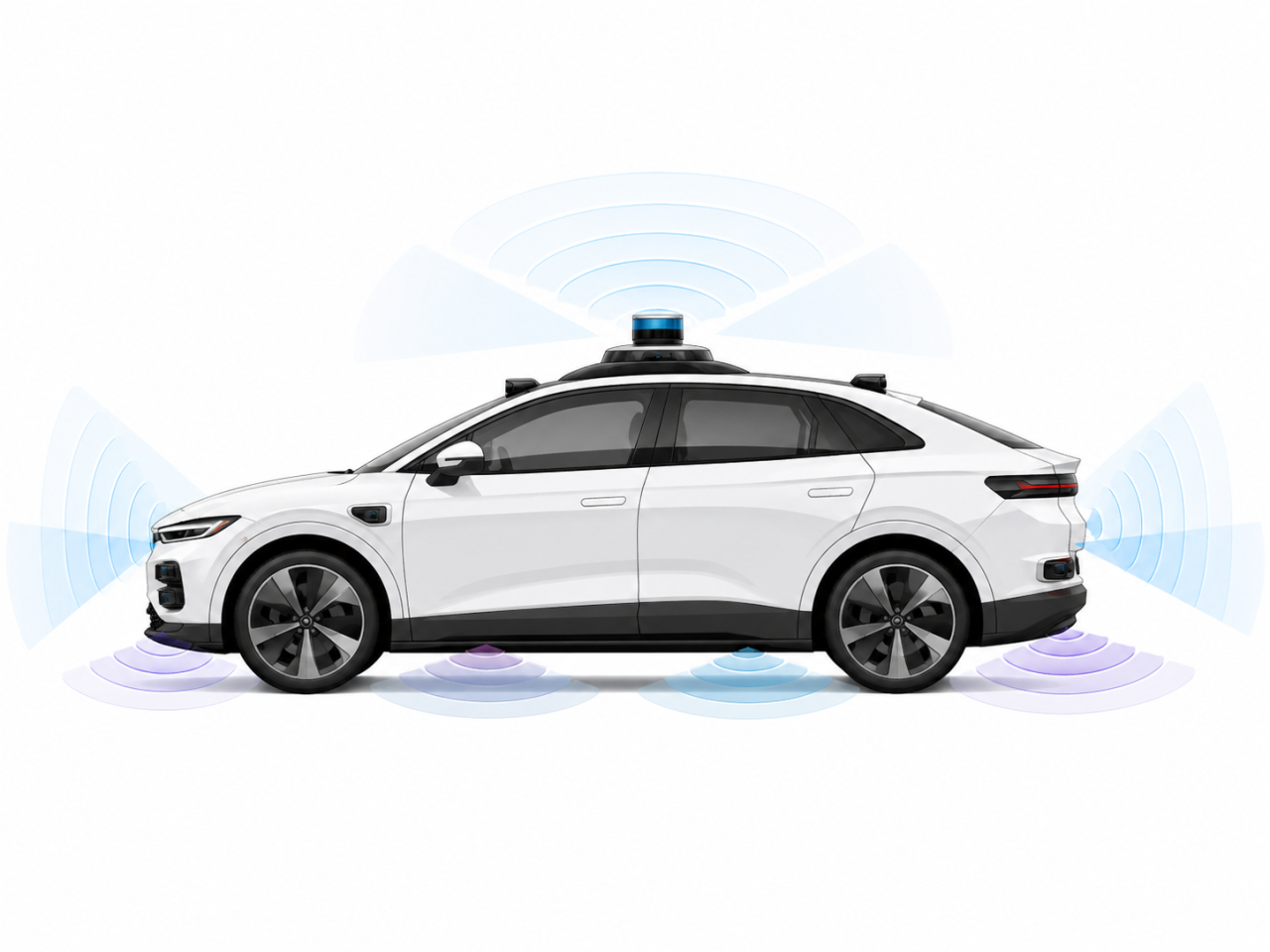
In an autonomous vehicle, driving decisions may result from a combination of technological tools, including sensors, cameras, radar, lidar, onboard software, an AI system, traffic data, remote updates, and a fleet supervision system. An accident is therefore no longer necessarily caused solely by human error. It may result from an error in the AI system, a software defect, a faulty update, an interaction between the human and the machine, or the absence of such interaction.
It is therefore necessary to determine who effectively controlled the vehicle at the time of the accident.
2. In France: A Specific Liability Regime for Vehicles with Delegated Driving
Since the Ordinance of April 14, 2021, France has had a specific liability regime applicable to autonomous vehicles, or “vehicles with delegated driving.” (4) These rules have been codified in the French Highway Code.
2.1 The Driver May Be Excluded from the Traditional Liability Regime
Article L.123-1 of the French Highway Code provides that the principle of criminal liability of the driver set out in Article L.121-1 does “not apply to the driver, for offenses resulting from a maneuver of a vehicle whose driving functions are delegated to an automated driving system, where that system exercises (...) dynamic control of the vehicle.”
Accordingly, when the automated system is effectively driving the vehicle in accordance with its conditions of use, the driver cannot be treated as if they had personally carried out the maneuver.
This exemption from liability is not absolute. The driver must remain able and ready to respond to a takeover request when the system requires it. The driver may still incur liability if they actually resume control of the vehicle, fail to resume control following a request from the system, fail to comply with orders or instructions from law enforcement authorities, or fail to comply with the rules governing the passage of priority emergency vehicles.
In short, the French regulation provides a framework for vehicles with delegated driving, but this framework is still largely structured around the presence of a driver who may be required to take back control. It will need to evolve to support the deployment of robotaxi services with no human driver on board or no driver in the driving position.
2.2 The Manufacturer May Be Liable in the Event of Bodily Injury
During periods in which the automated driving system exercises dynamic control of the vehicle in accordance with its conditions of use, the vehicle manufacturer, or its authorized representative, may incur criminal liability in the event of involuntary harm to life or physical integrity, or in the event of vehicular homicide or vehicular injury, where fault is established. (Article L.123-2 of the French Highway Code)
The manufacturer’s liability is not automatically triggered whenever an accident occurs. The system must have been operating in dynamic control mode, the conditions of use must have been complied with, and fault must be established.
2.3 What Liability Applies to the Other Actors Involved?
In an accident involving a conventional vehicle, liability primarily rests with the driver in the event of a driving fault, and may also fall on the repairer or manufacturer in the event of a mechanical defect. With autonomous vehicles, determining liability is more complex.
An accident involving an autonomous vehicle may result from a mechanical defect, but also from a software defect, poor system integration, a defective update, a cybersecurity breach, or a digital service that is essential to the vehicle’s operation.
Articles L.123-1 et seq. expressly refer to the liability of the vehicle manufacturer or its authorized representative, subject to the conditions described above. They do not directly identify the other actors involved in driving automation, such as the AI system provider or the software provider.
However, their liability may be sought on other legal grounds, including contractual liability, tort liability, warranties, recourse claims between professionals, or liability for defective products, depending on their role in the vehicle’s design, integration, and operation chain.
In practice, an accident involving an autonomous vehicle may require a technical expert assessment to determine, among other things, the version of the onboard software, system activation logs, available sensors, weather conditions, alerts issued, takeover requests, and any cybersecurity failures.
3. In the European Union: The Redefinition of Product Liability
At the European Union level, there is currently no uniform rule directly identifying the party liable for an accident caused by an autonomous vehicle. Road traffic rules and liability rules in the event of an accident remain largely governed by national law.
The rules set out in the French Highway Code are supplemented by the Directive of 23 October 2024 on liability for defective products. This directive substantially modernizes liability law by extending the concept of “product” to software and digital services, thereby making it possible to seek compensation for damage caused by defective software or a defective digital service. (5) It must be transposed into national law by December 9, 2026. (6)
This extension to software and digital services brings not only AI systems within the scope of the directive, but also onboard, standalone, and cloud-based software, as well as software updates. For example, driver assistance software, including ADAS and ADS software used in autonomous vehicles, now falls within the scope of product liability for defective products.
Product liability may therefore apply to several actors: the vehicle manufacturer, the manufacturer of a component, and also the provider of software or an AI system.
4. In the United States: No Uniform Regulation on Liability
In the United States, there is no comprehensive federal regime assigning liability for an autonomous vehicle accident to a single actor. Liability for road traffic accidents remains largely governed by state law.
However, a distinction should be made between two levels. On the one hand, rules specific to autonomous vehicles may designate the ADS, the owner, the manufacturer, or the holder of an authorization as the relevant legal point of contact. On the second hand, civil liability claims often continue to rely on traditional legal theories such as negligence, product liability, design defect, manufacturing defect, or failure to provide information.
Some states, such as Texas, treat the ADS as the operator of the vehicle for purposes of assessing compliance with traffic rules, while attaching certain legal consequences to an identifiable person, such as the vehicle owner or the holder of an authorization.
In the event of a malfunction, some states, including Texas, treat the automated driving system (ADS) as the vehicle operator, which may in practice refer to the company operating the fleet. New Hampshire links compliance to the vehicle manufacturer, the holder of an authorization, the certificate holder, or the owner. In litigation, victims may also seek to hold the manufacturer, the software provider, or the fleet operator liable, depending on the facts of the case.
California, for its part, has adopted a non-compliance notification mechanism in the event of a violation committed by an autonomous vehicle. This mechanism is primarily useful for the administrative monitoring of vehicles and does not, on its own, determine liability in the event of an accident.
In conclusion, autonomous vehicles do not eliminate liability in the event of an accident. They shift it from the driver to the “robot”, in other words, to the chain of actors involved in the vehicle’s design, operation, and maintenance.
In a conventional vehicle, the driver is the natural anchor point for liability. In an autonomous vehicle, it is necessary to determine who exercised dynamic control of the vehicle at the time of the accident, whether a software or hardware defect was involved, and who had control over the risk.
French regulations on vehicles with delegated driving establish a balancing mechanism between the driver and the manufacturer. However, this regime remains imperfectly suited to robotaxi services with no human driver in the driving position.
Finally, this liability regime will soon be supplemented by the transposition of the Directive on liability for defective products, which will extend compensation mechanisms to damage caused by onboard software, AI systems, and digital services integrated into autonomous vehicles.
* * * * * * * * * * *
(1) In the United States, Waymo, a subsidiary of Alphabet (Google), operates a fleet of autonomous taxis (robotaxis) in several cities, including Atlanta, Austin, Dallas, Houston, Los Angeles, and San Francisco (Bay Area). In China, several operators, including Baidu, Pony.ai, WeRide, and Didi, operate robotaxi fleets in Beijing, Wuhan, Guangzhou, Shenzhen, and other cities.
(2) For example, in the United States, in May 2025, Waymo recalled more than 1,200 vehicles following several collisions with gates and roadway obstacles, apparently without injuries. (Los Angeles Times, “Waymo recalls more than 1,200 automated vehicles after minor crashes,” May 14, 2025). In January 2026, the NHTSA (National Highway Traffic Safety Administration) opened an investigation after a Waymo vehicle struck a child near a school in Santa Monica, California. (Reuters, Jan. 29, 2026). In May 2026, Waymo suspended certain freeway operations and operations in Atlanta while deploying software fixes relating in particular to construction zones and flooded roads. (Reuters, “Waymo suspends freeway rides,” May 22, 2026).
(3) SAE International has definied six levels of autonomy. Level 0 (no automation) is limited to warning systems, such as lane departure warnings or emergency braking. At Level 1 (driver assistance), the system includes adaptive cruise control and lane keeping assistance. At Level 2 (partial automation), the system controls steering and speed under driver supervision, with immediate takeover required. At Level 3 (conditional automation), the system takes control of driving under certain conditions, and the driver must retake control when requested by the system. Level 4 (high automation) corresponds to autonomous driving within a defined geographic area, or geofenced zone, such as robotaxis. Level 5 (full automation) corresponds to complete autonomous driving without geographic or environmental restrictions and is not yet commercially available. This article focuses on Levels 3 and 4, namely conditional and high driving automation. (SAE J3016 Standard)
(4) Ordinance No. 2021-443 of April 14, 2021 on the criminal liability regime applicable in the event of the operation of a vehicle with delegated driving and its conditions of use.
(5) Directive (EU) 2024/2853 of 23 October 2024 on liability for defective products and repealing Council Directive 85/374/EEC. It should be noted that a draft directive on liability for AI systems had initially been planned. That draft was withdrawn to avoid confusion and overlap with the Directive on liability for defective products, which now covers software and services.
(6) Ministerial response of May 12, 2026 to written question No.11448 on the transposition deadlines for European Directive 2024/2853. (in French)
Bénédicte DELEPORTE
Avocat
Deleporte Wentz Avocat
www.dwavocat.com
May 2026